Read Dr. Claire Monod Cassidy’s book, articles, and book chapters.

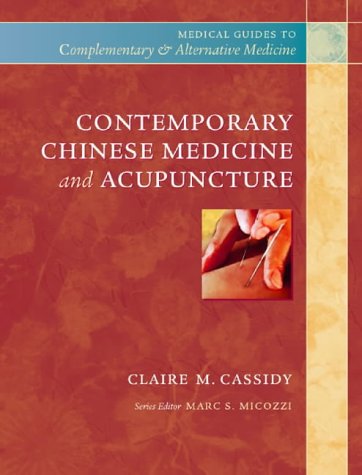
Book
Contemporary Acupuncture and Chinese Medicine
Churchill-Livingstone (Elsevier), 2002

Select publications
2023
Designed a training course with colleagues on complexity research, forthcoming
Ways of Healing: Exploring non-biomedical cures as emancipatory and biopolitical knowledges-practice
Body & Society (Forthcoming)
Nuñez Casal, Andrea, De Lima Hutchison, Coll, Cassidy, Claire, Gautama, Pushya A, Josyula, Kunhi Lakshmi, Laxmikanth, Pallavi, Santesmases, María J., Porter, John D., Mathpati, Mahesh
Healing is loosely defined as the process(es) of becoming well. Despite its all-embracing multispecies quality, social and scientific significance(s) across spaces, times and cultures, there is a lacuna concerning critical ontological and epistemological frameworks of healing, particularly in the areas of Science and Technology Studies (STS), feminist theory and body studies. As an initial attempt to approach these questions and limitations, we organised the open panel Ways of healing as part of the Society for the Social Studies of Science (4S) 2021 Annual Meeting. The panel engaged with local, traditional, and profane healing knowledge-practices as relational and sustainable healthcare approaches as well as biopolitical tools of neoliberal (individual) responsibilisation. By focusing on how to analyse, establish and build on ‘good relations’ between (1) traditional health cultures and biomedicine, and (2) lay and professional expertise, this conference report addresses pluralistic ways of healing in unequal and uncertain worlds.
2020
Scoping review of complexity in East Asian medicine and other science literature
Integrative Medicine Research, volume 9, number 1
L. Conboy, L. Taylor-Swanson, C. Citkovitz, R. Prasad, C. Cassidy
Purpose: Western style clinical research conducted on East Asian Medicine (EAM) has predominantly assumed that the rules underlying EAM clinical effects are identical to those of Biomedicine (BM). Recent analyses by SAR researchers and others suggest that this assumption is inaccurate, limiting face, model, and ecological validity, with demonstrable impact on trial results. The EAM therapeutic encounter may be better modeled and analyzed as an interaction of complex systems. Our team is conducting a scoping review of all available English language literature to consider the idea that complexity science can better mirror the actions and functions of EAM, than the reductionist BM. Our hypothesis is that we can take the findings from complexity research in the medical literature, as well as other complexity fields such as economics and physics, and apply them to EAM.
Methods: We are using a scoping review technique as it allows us to consider concepts related to complexity science and the relationships between those concepts.
Results: We will present our search terms, databases used, review our inclusion/exclusion criteria, and offer preliminary findings.
Conclusions: While this is a large undertaking, our results will continue the current scientific movement of interdisciplinary communication and collaboration toward a better understanding of complexity in EAM and other sciences.
2015
Issues and Challenges in Integrative Medicine, and Social and Cultural Factors in Medicine
Book chapters in Fundamentals of Complementary and Alternative Medicine (Saunders), edited by Marc S. Micozzi, pages 22-34 and pages 41-68, editions since 1994 including the revised 5th edition
2011
What does it mean to practice an energy medicine?
Book chapter in Energy, Medicine East and West, a Natural History of Qi edited by M. Micozzi and D. Mayor, pages 165-184.
An essential characteristic of qi is that it flows…it moves…it responds to, even forms, its own environment. That qi flows creates demands that guide Oriental medicine practice, in North America and Europe, in ways that make it distinctly different from biomedicine. In Part 1 of this chapter I support this assertion by asking readers to listen in on acupuncture practitioners as they explain their Medicine. In Part 2, I offer a social science grounding for my argument.
2010
How acupuncture is actually practised, and why this matters to clinical research design
European Journal of Oriental Medicine, volume 6, number 5, pages 20-25
When practising acupuncturists are asked to explain what they actually do when delivering acupuncture care, a highly fluid and responsive picture of care emerges. This matches well with the East Asian medical explanatory model of Qi Flow. Their practice model gives approximately equal weight to the patient-practitioner relationship and the delivery of techniques of acupuncture such as needling. Most clinical trials of acupuncture care to date have, however, not utilised these features, but instead imposed a rather static ‘sham’ control model borrowed from biomedicine, which is guided by a different medical explanatory model and practice habits.
Imposing one medical model on another medicine creates a methodological fault of model fit validity – in short, until acupuncture is clinically assessed as it is practised, we cannot know much about its capabilities. The author’s hopes are that a) there will be more and larger studies of how acupuncturists think about and deliver care, and that b) future clinical trials will increasingly tend the issue of model fit validity and create trials that accurately assess and reflect the capabilities of acupuncture care.
2008
Developments in Acupuncture Research: Big-Picture Perspectives from the Leading Edge
Journal of Alternative and Complementary Medicine, volume 14, number 7
Hugh MacPherson, Richard Nahin, Charlotte Paterson, Claire M. Cassidy, George T. Lewith, and Richard Hammerschlag
On November 8–9, 2007, the Society for Acupuncture Research (SAR) hosted an international conference to mark the tenth anniversary of the landmark NIH [National Institutes of Health] Consensus Development Conference on Acupuncture. More than 300 acupuncture researchers, practitioners, students, funding agency personnel, and health policy analysts from 20 countries attended the SAR meeting held at the University of Maryland School of Medicine, Baltimore, MD.
This paper summarizes important invited lectures in the area of how the field has developed in the past decade, along with a focus on appropriate strategies for advancing the field. Specific topics include: the impact of the 1997 NIH Acupuncture Consensus Conference on acupuncture research; whole-system strategies for developing the evidence without distorting the medicine; use of qualitative research methods to explore acupuncture as a complex intervention; use of qualitative research approaches to explore some “missing” topics in acupuncture research; and the impact of acupuncture research on clinical practice. A concluding section focuses on future directions in acupuncture research.
Some Terminology Needs for Writers, Researchers, Practitioners, and Editors as We Move Toward Integrating Medicine
Journal of Alternative and Complementary Medicine, volume 14, number 6
2007
Patient Patterns of Use and Experience of Acupuncture
Book chapter in Acupuncture Research: Strategies for Building an Evidence-Base (Elsevier) edited by Richard Hammerschlag, Hugh MacPherson, George Lewith, Rosa Schnyer, pages 37-56
With Kate Thomas
2004
What Does It Mean to Practice an Energy Medicine?
Journal of Alternative and Complementary Medicine, volume 10, number 1, pages 79-83
The concepts that energy exists and moves and that health is homeodynamic form the core assumptions of medical practices such as acupuncture that are known as energy medicines. These assumptions lead logically to practice characteristics that distinguish energy medicines from materialist medicines.
Getting to the point: a forum for master practitioners, researchers and educators
Clinical Acupuncture & Oriental Medicine, number 4, pages 148-163
G. Warner Seem, MS, LAc, Claire Cassidy, PhD, LAc, Helene M. Langevin, MD, LAc, Lixing Lao, PhD, LAc, and Mark Seem, PhD, LAc
On February 15, 2003 the Tri-State College of Acupuncture hosted the first in a series of colloquia to facilitate communication and cross-fertilization among leaders in acupuncture practice, research, and education in North America. In this first meeting, the purpose was to bring needling technique and the issue of de qi into an open forum, to address the issue of needling stimulation and needling sensation. To this end, five Master Practitioners (representing different styles and traditions of acupuncture) were each invited to demonstrate and discuss their techniques to an audience of leading researchers, educators and each other. An open forum discussion of each practitioners’ methodology and underlying theory ensued. Though the initial focus was on needling technique and de qi, the organic nature of the discussion illuminated a complexity of inextricably linked themes, underscoring acupuncture as a complex interaction between practitioner and patient.
What became most evident is the excitement generated by bringing together an interdisciplinary panel of experts, and that the creation of a forum to facilitate such interaction would be of great benefit to the field of acupuncture. It is our hope and expectation that developing such a forum for interaction among experts in the field of acupuncture will serve as a catalyst for ongoing interdisciplinary dialogue to inspire novel collaboration and further investigation into this complex and fascinating medicine.
2001
Beyond Numbers: Qualitative Research Methods for Oriental Medicine
Book chapter in Clinical Acupuncture, Scientific Basis, edited by Stux and Hammershlag
Qualitative research is the term given to the branch of scientific research that emphasizes the collection and study of perceptions and experiences — the “stories” — of living people. Stories are powerful. Some years ago, I was sitting in the treatment trailer at a city jail listening to women receiving acupuncture detoxification (detox) talk about their lives, their addictions, and their experiences of acupuncture care. All of it was interesting. But near the end of the visit, one woman uttered a few poignant words that encapsulated everyone’s hopes and reminded the practitioners of their deep task: “I chose acupuncture because I figured if a needle got me into this mess in the first place, maybe a needle could get me out.”
1998
Chinese Medicine Users in the United States Part I: Utilization, Satisfaction, Medical Plurality
Journal of Alternative and Complementary Medicine, volume 4, number 1, pages 189-202
Objectives: Chinese medicine is growing in popularity and offers an important alternative or complement to biomedical care, but little is known of who uses it or why they purchase it. This article reports the first in-depth, large-scale (n = 575) survey of United States acupuncture users.
Design: An anonymous mixed quantitative-qualitative survey questionnaire assessed user demographics, Chinese medicine modalities used, complaints, response to care, other health-care used, and satisfaction with care in six general-service clinics in five states.
Results and Conclusions: The user demographic picture was of mid-age, well-educated, employed, mid-income patients. They sought care for a wide variety of conditions; top uses were for relief of musculoskeletal dysfunction, mood care, and wellness care. A large majority reported “disappearance” or “improvement” of symptoms, improved quality of life, and reduced use of selected measures including prescription drugs and surgery. Respondents reported utilizing a wide array of practices in addition to Chinese medicine, while also expressing extremely high satisfaction with Chinese medicine care. The evidence indicates that these respondents behave as astute consumers within a plural health care system.
Chinese Medicine Users in the United States Part II: Preferred aspects of care
Journal of Alternative and Complementary Medicine, volume 4, number 2, pages 189-202
Part II details reasons given for satisfaction and situates respondent attitudes within a larger sociocultural framework. Here patients report in their own words about their experience of acupuncture care and their thoughts about their practitioners. The tone was extremely positive—users liked the care, their practitioners, and the results of care. They used this Medicine because it was ‘holistic’ rather than because it was ‘Chinese.”
1994
Unraveling the Ball of String: Reality, Paradigms and Alternative Medicine
Advances, The Journal of Mind-Body Health, volume 10, number 1, pages 5-31
An avant garde paper for its date exploring the characteristics of non-biomedical health care through the sociopolitical models engendered by the two meta-paradigms often summarized as ‘reductionistic’ and ‘holistic.’ Many, but not all, non-biomedical practices are holistic, meaning, they interpret the world in terms of whole systems, and see human body-beings as networked both within, and with the world outside. To achieve accurate scientific results, this model requires complexity approaches to research design, in contrast to the common reductionistic approach illustrated in the ‘randomized controlled trial’ (RCT) highly trusted in biomedicine, but difficult to apply smoothly to hands-on and immediate care practices. The task of ‘unraveling the ball of string’ consists in understanding the deep differences in perception and practice between holistic and reductionistic medical practices, and then finding ways to put these to work to deliver overall better medical care.
1991
The Good Body: When Big is Better
Medical Anthropology, number 13, pages 181-213
Americans like things big—tall and large people, tall and large buildings and machines. This paper provides evidence for the human size issue, from the heights of Presidents (who have always been taller than the average with 2 exceptions), to the preferred broad and padded physiques associated with successful businessmen. In contrast to men, women are most admired when tall and thin, a pattern associated with the upper class, and short women may also be judged ‘cute’ if slender and cheery.
1987
Worldview Conflict and Toddler Malnutrition: Change Agent Dilemmas
Book chapter in Child Survival, Culture and the Value of Children, edited by N. Scheper-Hughes
The child lay against her mother’s breast. Sometimes she whined, mostly she was quiet. Her eyes were slightly sunken, her skin was hot and dry. The day before, the mother had withdrawn food to help control her diarrhea. Several hours before, the mother had withdrawn fluids to prevent the feverish child from suffering chills. The fieldworker said, “She must have aspirin and water.” The mother worried, “No, it will make her cold.” But the fieldworker prevailed; the child gulped two cups of water and some aspirin. Soon she began to shake, to drip. Her fever broke and she slept. Was the mother neglecting her child? Was the mother ignorant of appropriate health-care techniques? Did the fieldworker behave ethically?
1982
Protein-energy Malnutrition as a Culture-Bound Syndrome
Culture, Medicine and Psychiatry, volume 6, number 4, pages 325-345
A new definition of the concept of culture-bound syndrome demonstrates that culture-boundedness is common and applies as well to Western biomedical disease categories as to nonWestern categories. Culture-boundedness is important when a common disorder with a large sociopsychological component is frequently treated, but unsuccessfully. To improve intervention success, therapists must recognize and accept that clients and interventionists may employ widely dissimilar culture-bound explanatory models. Therapists must learn to synthesize among models, neither rejecting nor discounting those of clients. The fact that Western notions of cause are culture-bound has gone largely unrecognized because of the tendency among biomedical scientists to treat science as if it were culture-free and universally comprehensible. This is of course a naive and invalid understanding. These points are illustrated for the case of protein-energy malnutrition. If those who design and facilitate intervention to alleviate hunger can come to understand that the scientific explanatory model of protein-energy malnutrition is only one among several cogent models, they will be in a strong position to understand intervention failure and possibly to overcome it.
1972
Health and Nutrition in Prehistoric Amerindian Skeletal Populations, Hunter Gatherers and Agriculturalists
Dissertation at the University of Wisconsin available from Michigan Microfilms, Inc. in Ann Arbor, Michigan
A comparison of two Ohio Valley skeletal populations showed that the more recent horticultural population was significantly less healthy than the older hunter-gatherer population. The later populations had high levels of toddler protein malnutrition, and high pre-natal loss due to a widespread disease that closely resembled Yaws. These findings matched and supported other contemporary findings and helped replace the earlier assumption that farmers were sure to be healthier than hunter-gatherer populations.
 Claire M. Cassidy